
THE MONSOONS OF TIWI BEACH
A Coast in Season
Tiwi Beach sits quietly along Kenya's southern coast, just a few kilometres north of Diani, where the Indian Ocean rolls in over a coral reef and pristine white sandy beach. Like all of the Swahili coast, it is a place defined by the monsoons -seasonal winds so reliable and ancient that they built civilizations, carried trade empires, and shaped the cultural life of the coast for millennia.
To truly understand Tiwi, you need to understand its winds. At Sandarusi and Tiwi Beach, the seasons don't just change the weather; they define the pace of coastal life.
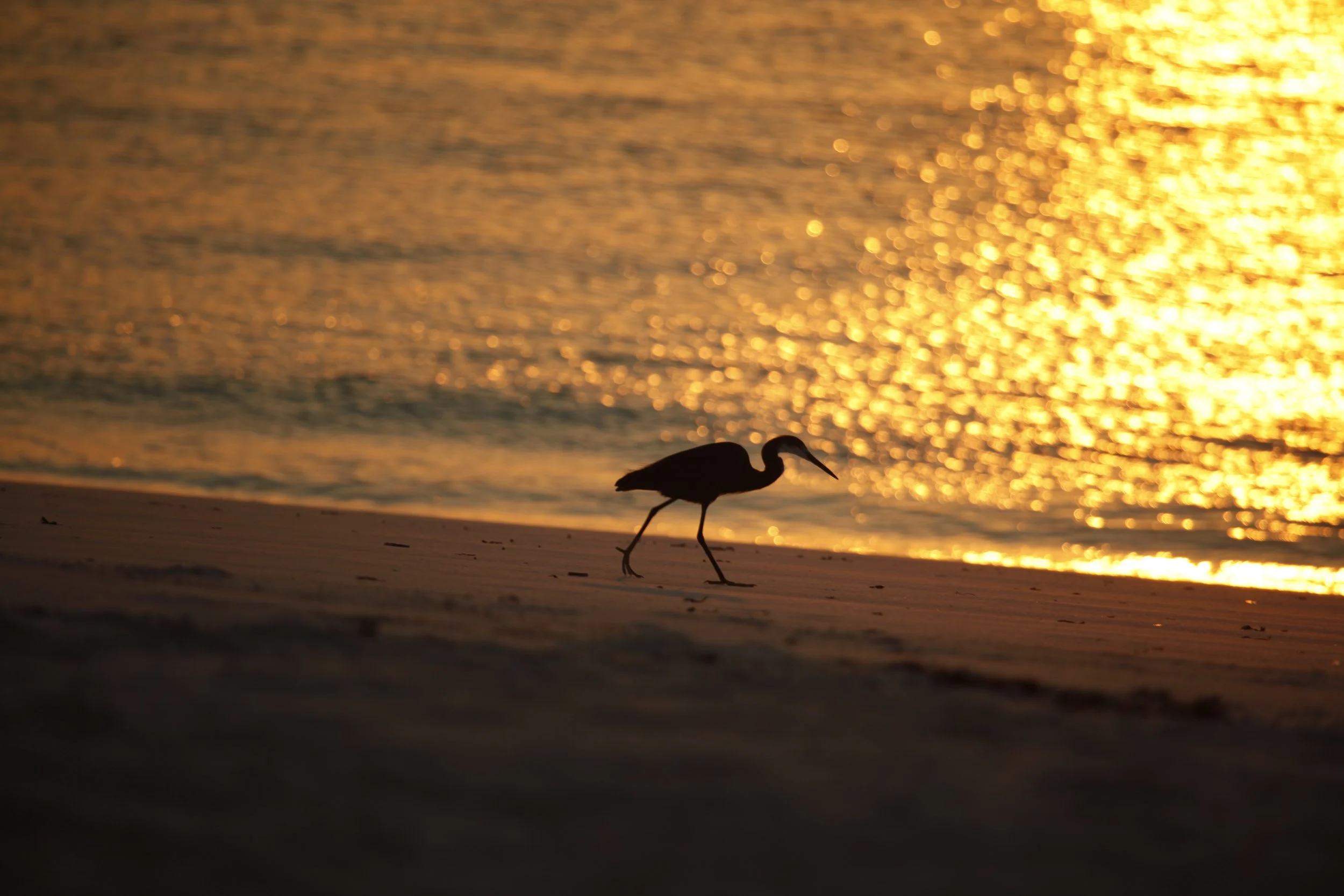
The Kaskazi - November to March
The Kaskazi, the northeast monsoon, arrives around November and holds through to March or April. It blows warm and steady down from the Arabian Peninsula and the Indian subcontinent, smoothing the sea and flooding the beach with long, golden days. The water turns a remarkable shade of turquoise, clear enough to see the reef below the surface, and the ocean calms. At times it can feel like having a bath when the tide is out and the water runs shallow.
For centuries, this was the wind that carried Arab, Persian, and Indian traders south along the Swahili coast, their dhows laden with cloth, pottery, and spices. That heritage lives on today in the local fishing communities who still read the sea with the confidence of generations.
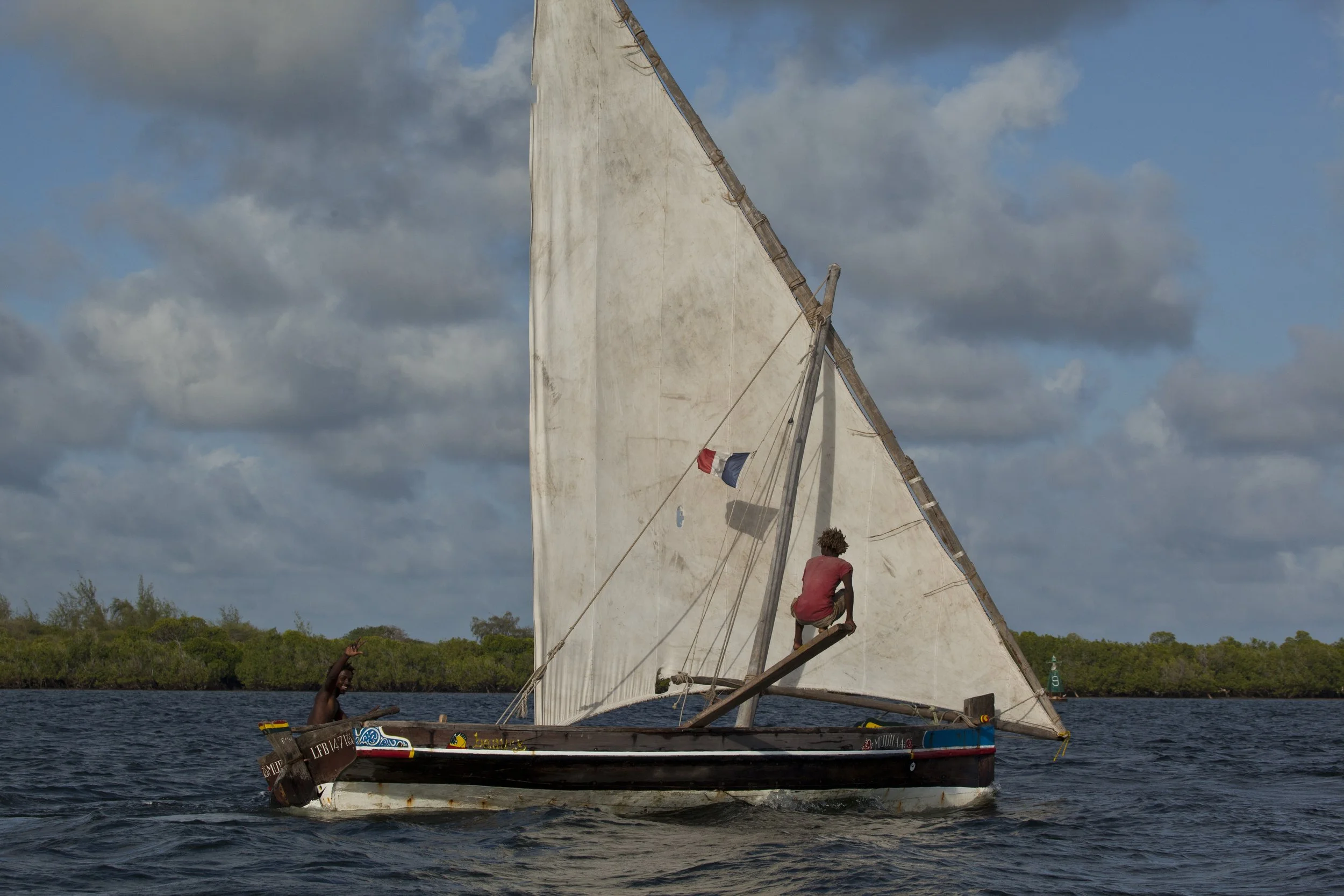
Traditional dhow under sail — Kaskazi trade heritage
Offshore, the Kaskazi is peak game fishing season - sailfish run hard along the continental shelf, blue and black marlin are reliably encountered beyond the reef drop-off, and yellowfin tuna school in numbers that make any angler's pulse quicken. Wahoo and dorado follow the warm current lines. Closer to the reef, calmer conditions allow local fishermen to work hand lines and nets with ease, bringing in kingfish, snapper, barracuda, and squid.
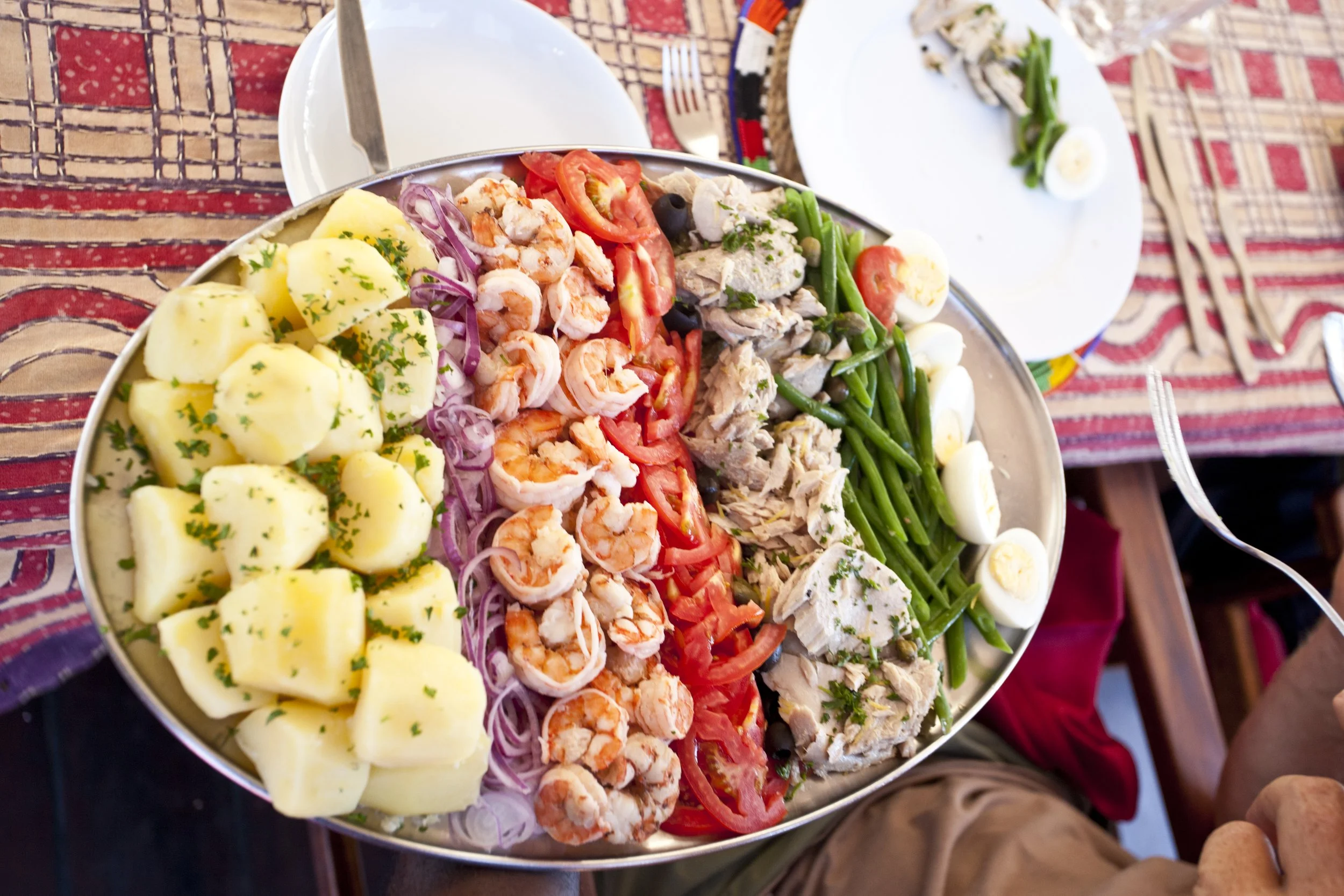
Fresh catch from the reef — local seafood platter
On land, the Kaskazi overlaps beautifully with mango season. The coastal hinterland bursts with fruit: enormous, sweet mangoes appearing in roadside piles and local markets from November onwards, in varieties you simply won't find elsewhere. Coconuts find their way into everything- fresh drinking coconuts cracked at the beach, coconut milk in the fish curries and rice dishes of the Swahili kitchen, copra drying in the sun.
Whale sharks drift in from the open ocean from October through to early February, and sea turtles, both green and hawksbill, choose these beaches to nest. Watching a turtle haul herself up the sand at Tiwi on a warm Kaskazi night is one of those experiences that remains in your memories for a lifetime.
The Turn - April
April is a pivotal point. The Kaskazi exhausts itself, the wind shifts and softens, and the sky begins to build in the west. The air grows heavy and electric in the afternoons, and the first serious rains begin to fall. The coast holds its breath.
The Masika - April & May
The long rains, known as Masika, arrive with the wind turning toward the southeast, sometimes in sustained, heavy bursts, occasionally in shorter spells. The rivers behind the coast run full, our Tiwi river more abundant, and the rust-coloured water drifts in as the bush transforms almost overnight into something lush and impenetrable.
The sea changes character too. The Kusi pushes up swells from the direction of Madagascar, and the offshore waters can be rough enough to occasionally keep the game boats in harbour. Traditional fishing turns to the more sheltered lagoon and reef areas, where skilled local fishermen return to the beach with prawns, crab, and reef fish. The prawns of the Kenyan south coast are exceptional -large, sweet, and best eaten simply, grilled over charcoal with a squeeze of lime.
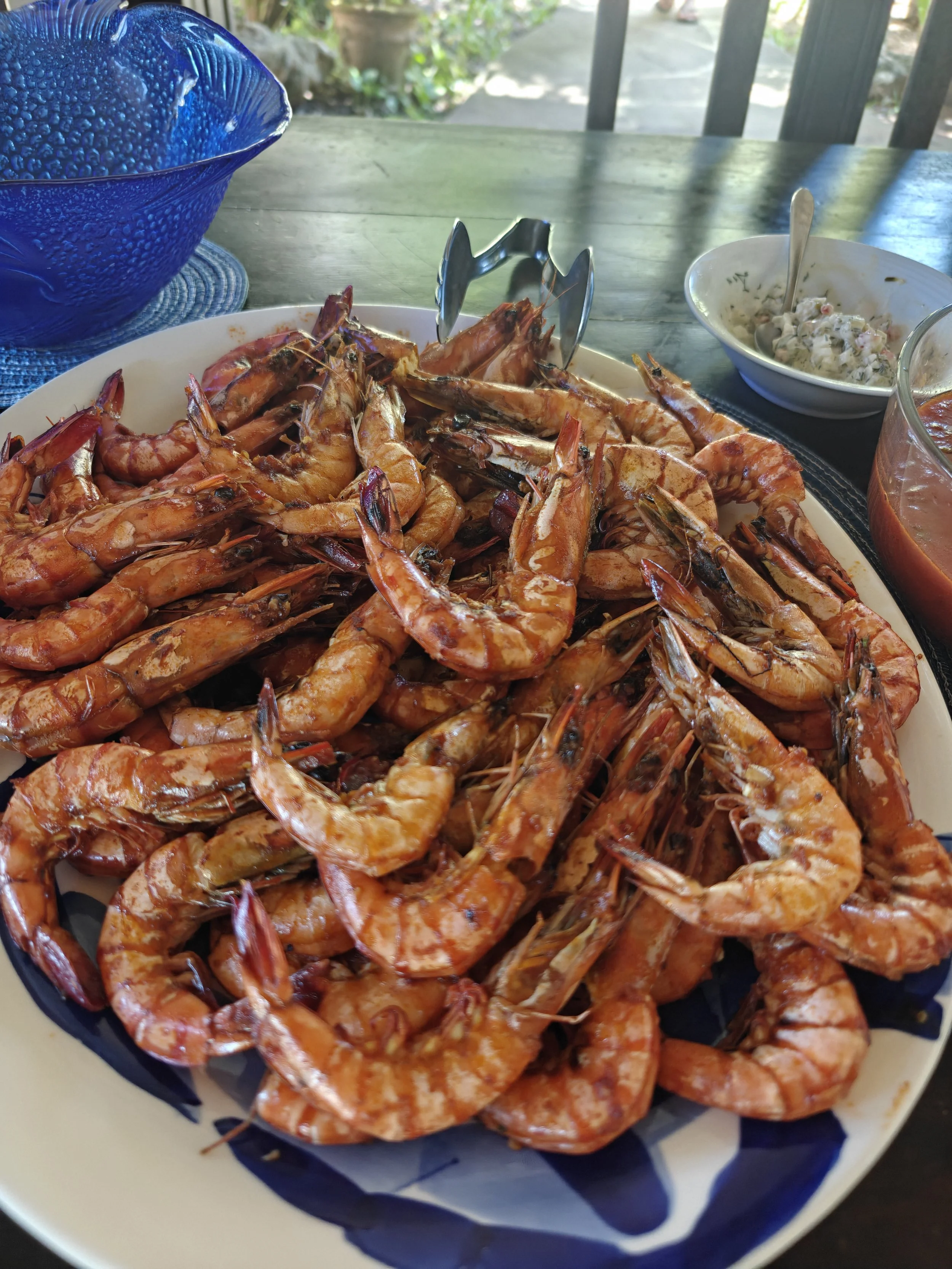
Grilled prawns, Kenyan south coast style
On land, the Masika is quietly the most productive time of year. Rain falls on the red soil of the Shimba Hills just inland, the grassland recovers, and the possibility of spotting the rare sable antelope becomes more likely.
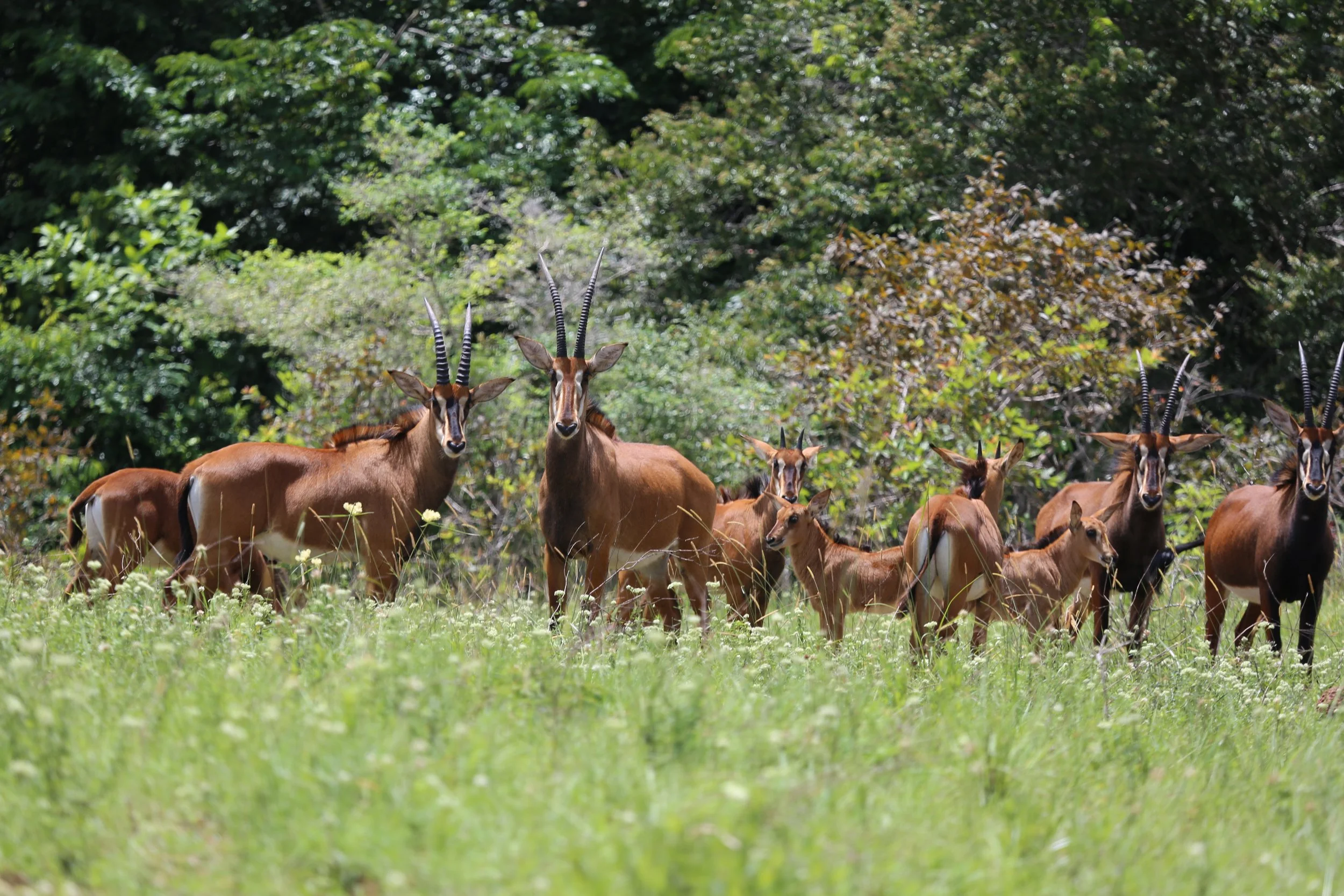
Sable antelope herd, Shimba Hills
Vegetables, tomatoes, and peppers fill the local markets. Passion fruit comes into season, and cassava, the great staple of the coast, is planted and thrives. For those willing to travel in the rain, there is a different kind of beauty to Tiwi in the Masika: fewer people, the beach entirely to yourself, the sound of rain on the palm fronds, and the kind of deep green the coast only shows when it has been properly watered.
The Kusi - June to October
As the heaviest rains ease, the southeast monsoon settles into a drier, cooler rhythm through the middle months of the year. This was the wind that historically carried trading dhows back north, loaded with ivory, gold, and the famous Kenyan mangrove timber so prized in the Gulf, now protected. It blows with a purpose you can feel on your skin. The nights grow almost cool by coastal standards, and the ocean begins to steady.
The Kusi months bring cashew nut season along the southern Kenyan coast. Cashew trees, planted in their thousands in the coastal belt, drop their vivid orange-red fruit from around August, and the nuts are processed and sold locally. Pineapples come through in good numbers from the coastal hinterland, and coconut is, as always, everywhere.
Dolphins can be spotted off the fringing reef, riding the swells in small pods, and humpback whales, on their annual migration, have been seen close enough to watch from the beach. If you sit upstairs at Sandarusi with a pair of binoculars, I have been lucky enough to spot them- but boat trips see them more often.
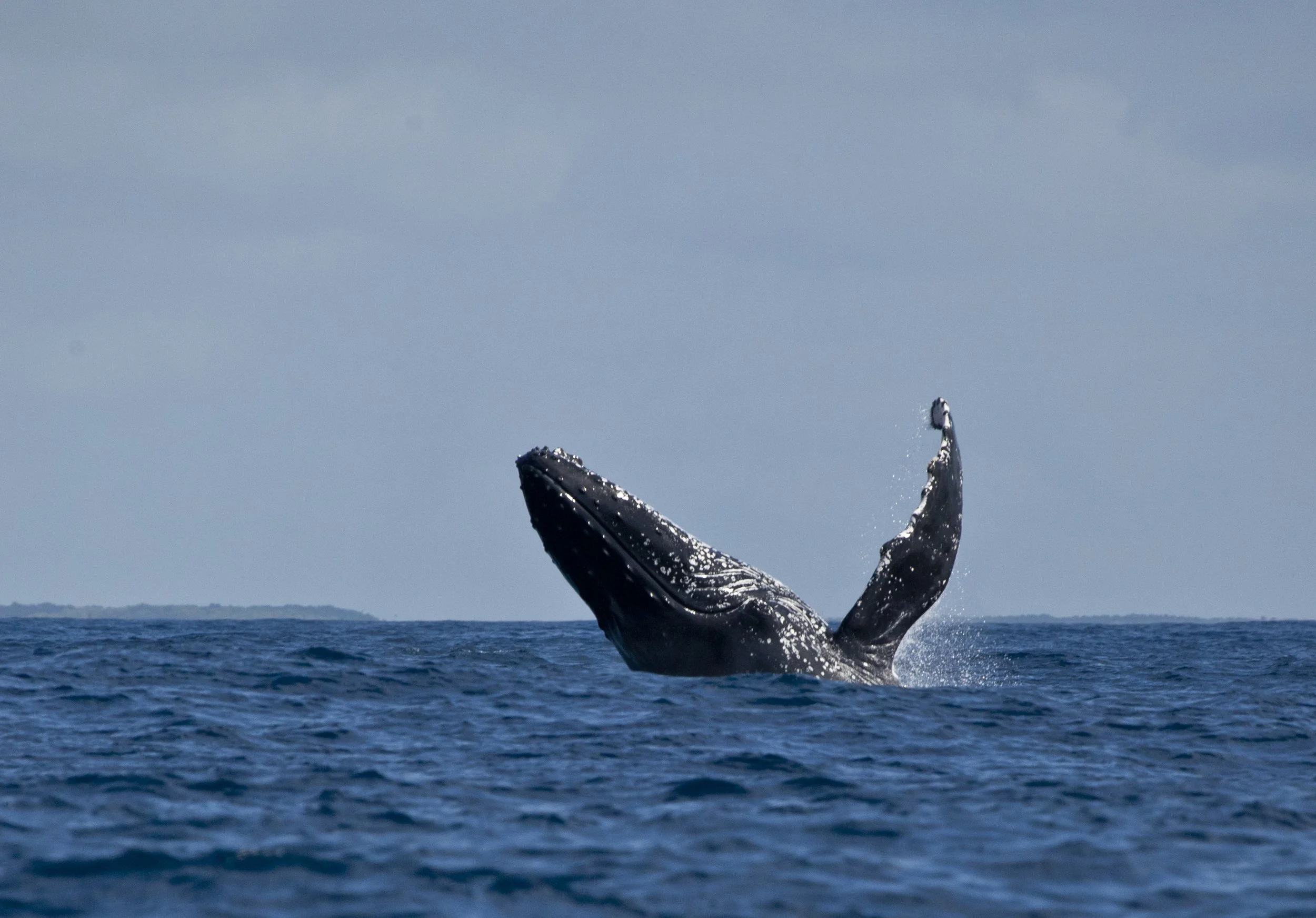
Humpback whale breaching — Kusi migration season
The Short Rains - October to November
Before the Kaskazi returns, the coast receives one final gift: the Vuli, the short rains, which arrive in October and run through November. Shorter and less predictable than the Masika, the Vuli nonetheless tops up the rivers, freshens the soil, and sets the stage for another mango season. The cycle begins again.
A Rhythm No Calendar Quite Captures
For the Swahili-speaking communities who have lived along this coast for generations, the monsoons were never merely weather; they were the organising principle of life, governing when to plant and harvest, when to sail and when to stay ashore. The very word monsoon traces back to the Arabic mawsim, meaning season a reminder that this coast was central to the vocabulary of the ancient world.
At Tiwi, and indeed at Sandarusi, the monsoons still come and go as they always have. The sea shifts its mood with each turning of the wind, the market stalls change their colour with each new harvest, and the ocean gives and withholds according to a rhythm no calendar quite captures.
Come in the Kaskazi for the mangoes and glass-calm mornings.
Come in the Kusi for cool air, prawns, and a coast that belongs almost entirely to you.
Either way, Sandarusi and Tiwi Beach await your visit to their shores.