
Sandarusi - A History in Salt and Stone - Tiwi Beach, South Coast Kenya
Every family has a place that becomes the fixed point around which everything else orbits. A place that turns up in the background of photographs, that comes up in conversation without being summoned, that younger members of the family know first as the destination of long drives and gradually come to understand as something more like a compass bearing. A thing to return to.
For the Low family, that place is Tiwi Beach. This is the story of how a piece of coastline became a home, and how that home became Sandarusi.
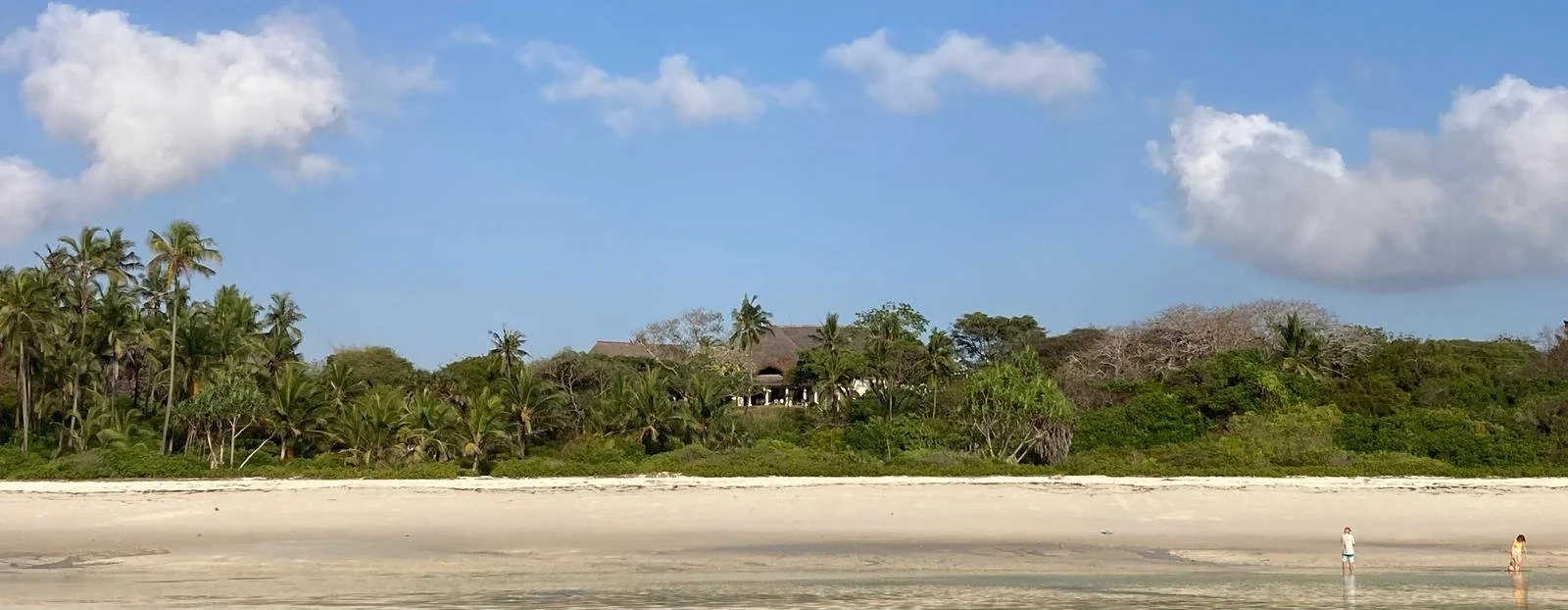
The Beginning
Tiwi Beach sits some forty kilometres south of Mombasa, just far enough from the main road to feel like the world has been left behind. A long, generous arc of white coral sand, protected by a reef that turns the Indian Ocean the colour of tourmaline in the shallows, with coastal forest rising behind it before climbing into the Shimba Hills. It is the kind of place that requires no sales pitch. It does its own talking.
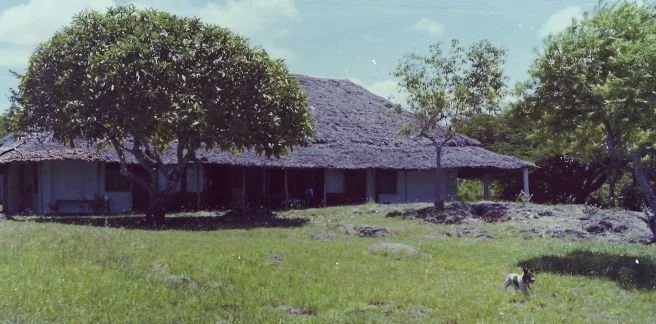
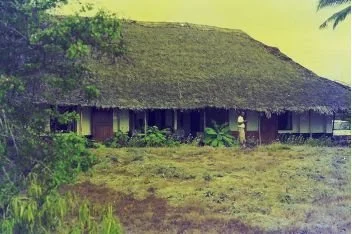
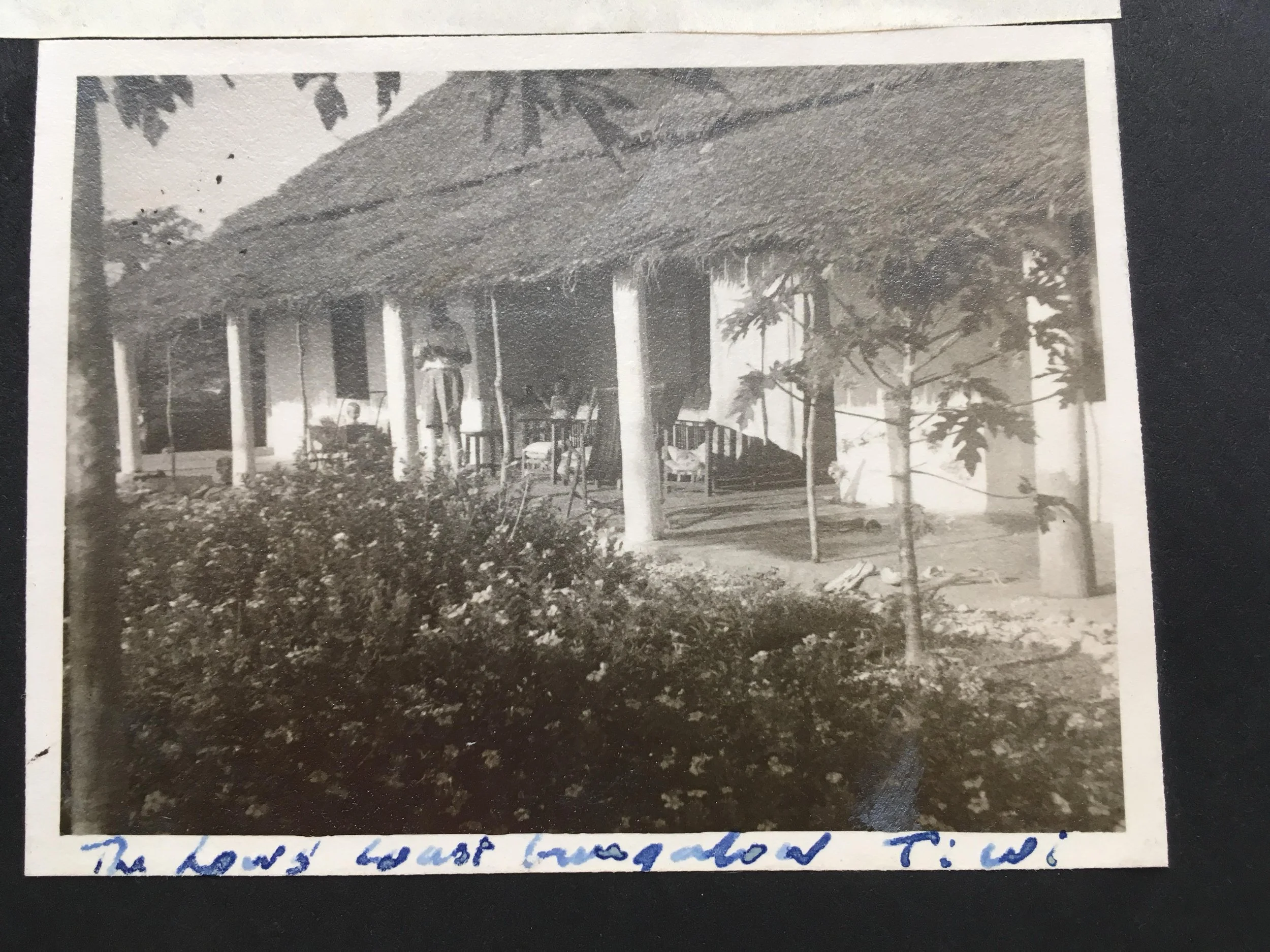
The Low family Banda
The Low family Banda existed before Sandarusi. A Banda is a traditional African shelter or hut, commonly found across East Africa, made from mud and wattle.
The original structure on the plot was a Banda in the truest coastal Kenya sense: simple, open, built of mud and wattle in the 1940’s, designed to catch the sea breeze and ask nothing more of its occupants than that they slow down.
It was the kind of building that understood its purpose completely, and it made no apologies for its simplicity. The area around was wilderness. The path to the beach, sand and coral. And at first there was no running water, only a freshwater well, and a long drop! The back verandah was added in the 1950’s, to incorporate 2 bathrooms on either end, with an outside tap where kids always rinsed down - though those bathrooms were not without their dramas. On one memorable occasion, two siblings managed to lock themselves into one of the bathrooms and couldn't get out. Frantic instructions were yelled through the door, their dad resorted to standing on a chair outside peering in through a tiny vent, but nothing worked. The caretaker of the house, a wonderful local man called Nyasiri, helped them all decide that the best bet was to hammer out an entire door panel, and then promptly and then promptly reached in a large hand to unlock the door from the inside.. We like to think this “faulty lock” was part of the house’s character!
The Siesta and the Flipflop
There are stories, and then there are the stories that define a place. The ones that are told so many times they stop being stories and become, instead, the furniture of family memory. Solid. Permanent. Essentially true.
Grandpa Wilfrid took his afternoon rest seriously - always referred to as “Egyptian PT!”. The Banda at Tiwi, with its open walls and Makuti roof and its particular quality of sea air in the hour after lunch, was built for exactly this kind of siesta, the long horizontal pause between the heat of midday and the gentler light of the afternoon, when even the Indian Ocean seems to exhale and settle.
Children, too, were expected to share in the quiet. They did not always manage this!
Half an hour into siesta time, with the house wrapped in the hush that adults require of children who are doing absolutely the opposite of napping, there came a whistling sound from above the wall-plate of the open plan house.
A flipflop. Airborne. Arching with measured authority over the open walls. Landing in the children’s room behind with considerably more impact than its weight might suggest. No words. No raised voice. No second warning. Just a single flipflop, deployed with the accuracy and authority of a man who had given this some thought and who intended to do it again if necessary, never the case as it had the desired effect!
The Eerie & the Very Eerie pools
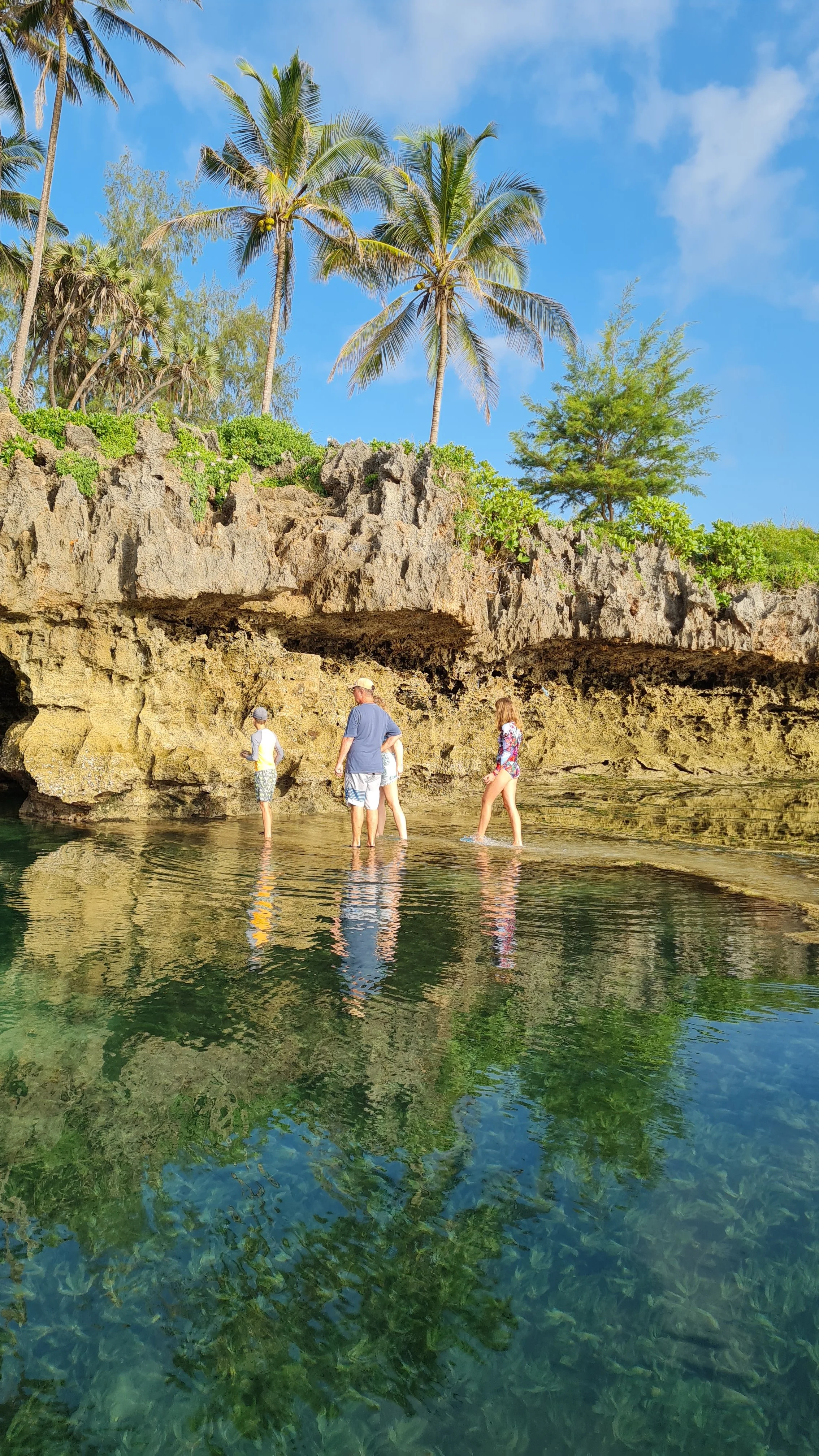
At low tide, the coral reef off Tiwi reveals itself. The retreating ocean uncovers a series of natural rock pools to the North of the beach, carved by centuries of water and coral and time, each one different in depth, character and the particular quality of light it holds. The Low Family knows these pools well, and termed them Eerie and Very Eerie…no wonder as the deeper you swam the darker and more scary they became. With a mask you could see lionfish, stone fish, and many more unusual and fun things.
Grandpa had his favorites. He would swim in the very eerie - the deeper, more serious of the two - and then dive under the coral to emerge unexpectedly in a smaller pool nearby!
The seamless disappearance. The interminable pause. And then, somewhere unexpected, resurfacing with the equanimity of a man who had done this a hundred times and fully intended to do it a hundred more.
For anyone watching from the rocks- and there is always someone watching from above the rock pools -it was simultaneously the most terrifying and the most reassuring sight. As young grandkids it was an ambition, as older ones a fun thing to do together. You could also jump from the cliff into the pool (about 4meters) which was lots of fun.
Nowadays if you look at the Eerie from above it’s like a map of Africa and is now referred to as the Africa Map Pool.
The River Mouth
A couple of kilometres South from the house, along the beach, the Tiwi River meets the Indian Ocean, here it creates a break in the coral reef. Here the fishing boats (ngalawa) head out and access the open sea….long ago the Kongo Mosque (which is still there) was a traditional fishing meeting point.
This is where the Shimba Hills pour themselves into the sea, fresh water carrying the memory of forest, joining salt water at a break that offers waves of a different character from those along the main beach. The Low family have always loved this, and every generation has made the walk to the river mouth, and spent long hours in the water.
The forest on the Tiwi side of the river is a Mjekenka, a sacred grove of a kind that holds deep significance for the Mijikenda peoples of the Kenya coast. These forest sanctuaries, known more broadly as a “Kaya”, have been protected for centuries, first by custom and spiritual authority, and more recently by Kenyan law. To walk alongside the Mjekenka is to be in the presence of something held in trust for a very long time by people who understood, long before the term entered common currency, what it meant to protect a forest.
The waves at the river mouth are better. The Low family has known this for generations.
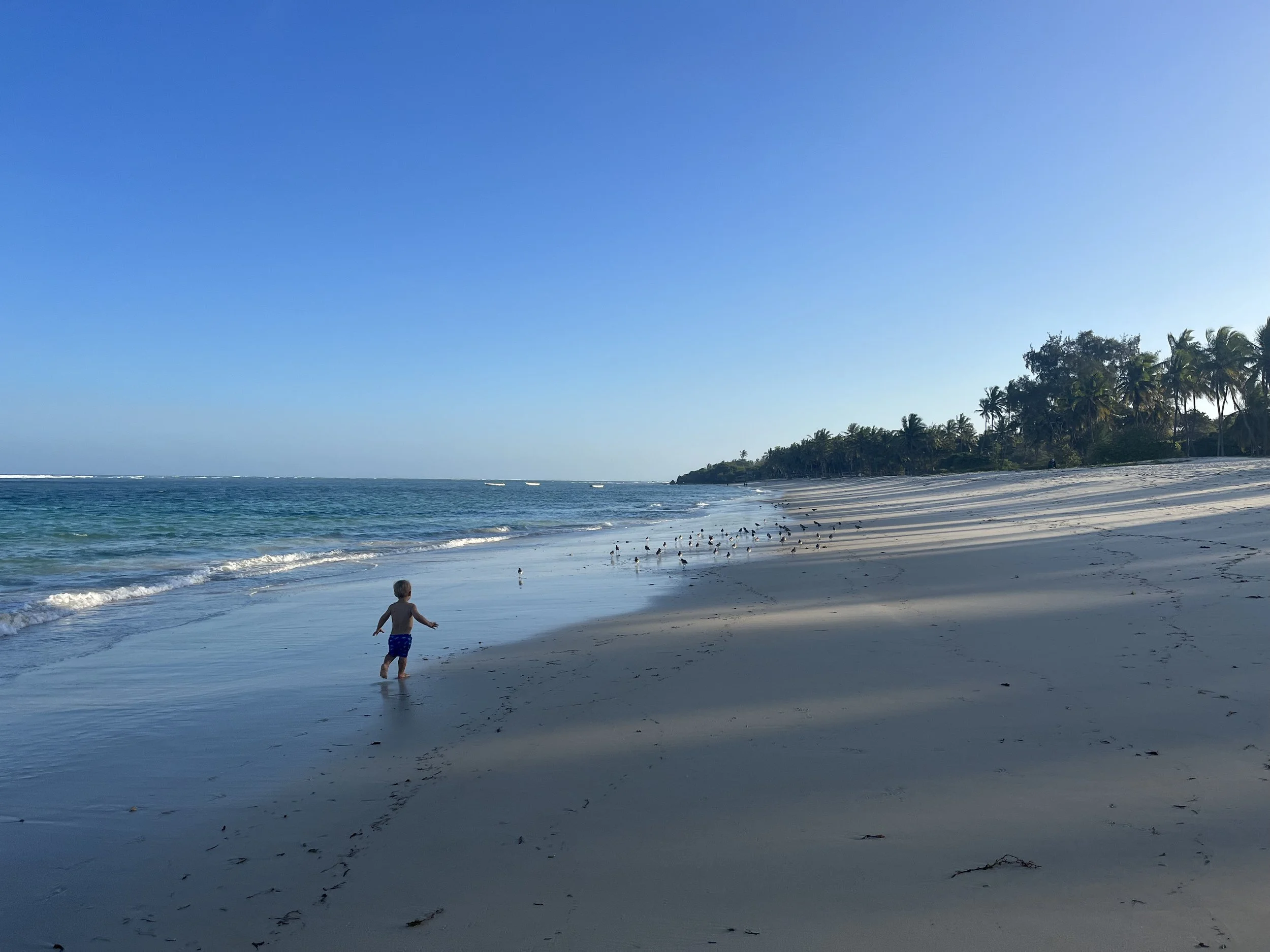
It is the kind of experience that teaches swimming technique in a way that no pool ever quite manages. More than one member of the family has discovered, in the very middle of what seemed a straightforward crossing, that underestimating a tidal river is an educational error. They have fortunately, without exception, arrived on the other side.
Sometimes crossing the river can be challenging. The back-current at the mouth, particularly when the Shimbas have had rain, has its own intentions entirely.
1996–1997: The Decision to create something new.
By 1996, the Low family had been coming to Tiwi long enough to understand what the place was and what it could be. The decision was made to knock down the Low family Banda and build an upgraded home. The mud and wattle came down in under two days and was returned to the garden not wasted, just redistributed. Any solid rubble was re-used as foundation stone.
Six months later, and built through the floods of El Nino, a house stood in its place, much of its furniture made on the plot during construction, fabulous pieces first found washed up on the beach and now redesigned to serve as dining tables, dividers, and house features. Other family treasures upskilled to basin units, and beds to keep the family character.
The approval process for the new house had its own story: plans were faxed from Tiwi up-country to Trustees in Naivasha, but the fax page wasn't quite long enough, and the dimensions were cut off. The Trustees liked what they saw, approved the plans (entirely unaware of the scale they were signing off on). When they later visited Tiwi to check on progress, they were reportedly surprised by the proportions (rather larger than the old Banda), luckily their “shock” didn't last long, and the family soon set about enjoying both the new house and its pool.
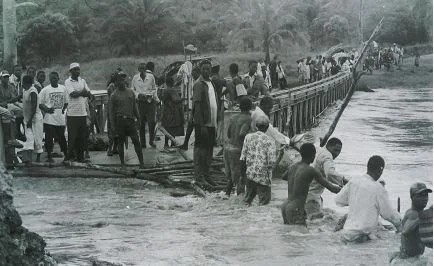
Ramisi River, El Nino Floods 1997
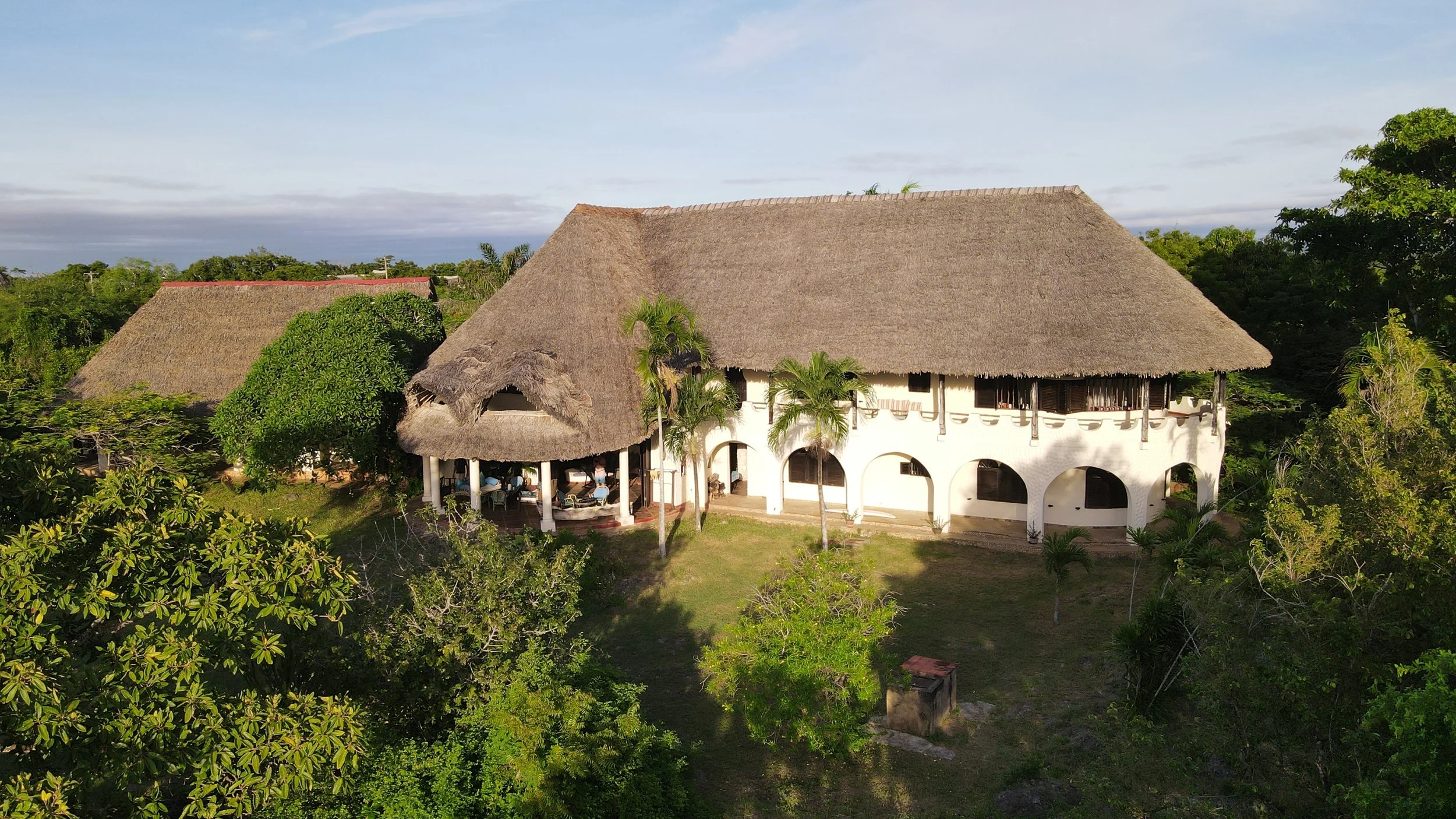
New Sandarusi House
The new house was named Sandarusi, after the Msandarusi tree - Hymenaea verrucosa - a slow-growing hardwood indigenous to the East African coast, prized for centuries for the resin it produces- it seemed appropriate that the growth of this property ( worked through generations) and the slow development of the tree- combined well into a name for the new home!
The banda came down in under two days. The mud and wattle was returned to the garden not wasted, just redistributed. Given back to the earth it came from.
2016: The Pool
The original pool at Sandarusi sat between the ancient baobab trees on the plot - imperturbable, indifferent to the passing of human decades. In 2016, a decision by some of the family to sell, and others to keep meant we divided the land and the original pool remained with our sellers on the neighbouring plot. So, a new pool had to be imagined. What guests find today is a twenty-two metre length pool following the natural dip of the terrain toward the ocean, with a horizon pool sitting precisely where land and Indian Ocean sky meet, interrupted only by palm trees.
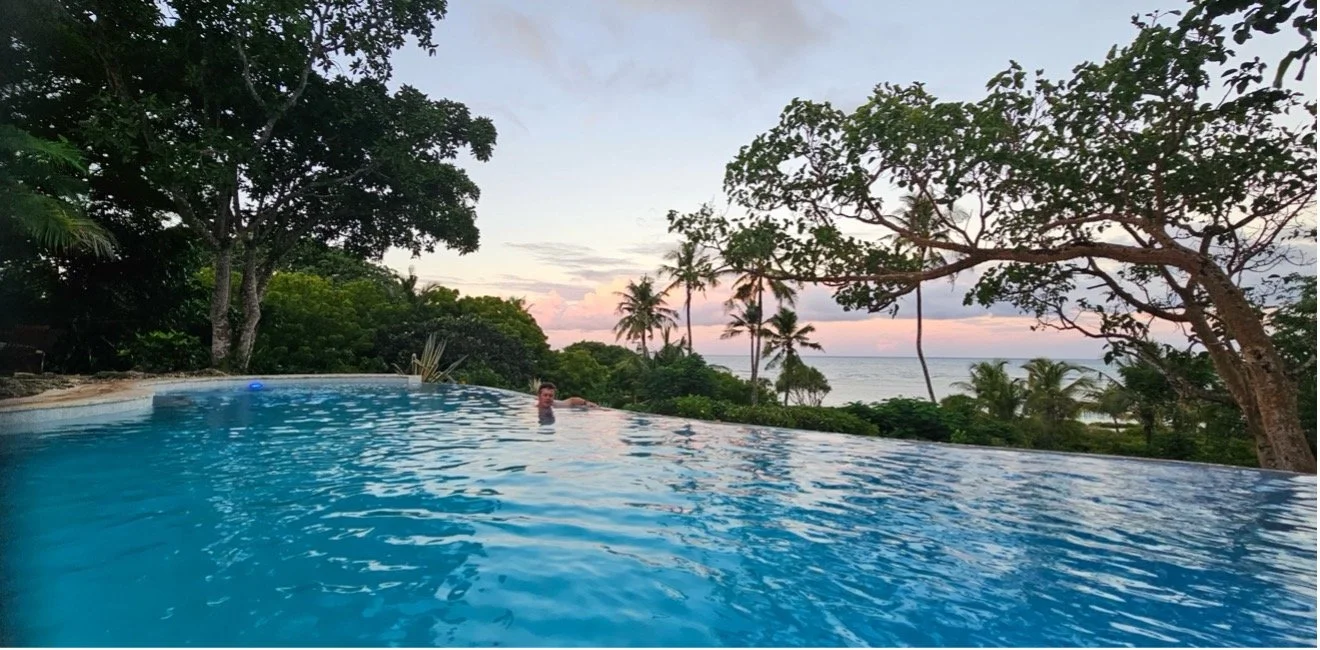
The new pool at Sandarusi - a length and horizon pool, looking out towards the Indian Ocean
What Endures
Nyasiri's memory is here, as surely as the sea air is here. The Very Eerie is still there at low tide, if you know where to look. The Mjekenka still stands, protected by custom and time. The Tiwi River still runs from the Shimbas to the sea with its own intentions and its own back-current. The flipflop is, in all likelihood, still somewhere on the property.
And what’s also still for sure is Sandarusi itself, a home that has encompassed more than eight decades of the Low family’s life with its coral pools, body surfing, beach-combing for coastal treasures, and its long relaxed evenings. Sandarusi, despite its several incarnations, nevertheless remains an unfailing constant for our family, a steady compass for our collective soul.